Checking out the Perks and Techniques of Aluminum Casting in Modern Production
Aluminum casting has emerged as a critical method in contemporary manufacturing. Its light-weight buildings boost power efficiency and reduce transport expenses. Additionally, innovations in casting approaches make it possible for complex designs and quick prototyping. The benefits expand beyond plain effectiveness - Aluminum Castings. The sustainability of aluminum casting procedures offers considerable implications for different industries. Recognizing these facets can disclose the transformative impact of aluminum in modern manufacturing practices. What more advancements could redefine its duty?
The Lightweight Advantage of Aluminum Casting
Aluminum casting uses a significant light-weight benefit that is changing sectors reliant on durable yet manageable materials. This residential or commercial property is specifically helpful in industries such as vehicle and aerospace, where every ounce counts in performance and fuel efficiency. The reduced weight of aluminum elements permits improved handling, reduced transportation costs, and improved power effectiveness during procedure. Unlike heavier metals, aluminum gives a balance of toughness and agility, making it an optimal selection for facility applications that demand high performance without compromising architectural honesty. On top of that, the deterioration resistance of aluminum prolongs the life expectancy of cast parts, reducing the requirement for regular substitutes. This mix of light-weight characteristics and durability settings aluminum casting as a crucial technology in modern manufacturing processes, motivating advancement and supporting the advancement of advanced products that meet the developing demands of various sectors.
Boosted Layout Adaptability and Intricacy
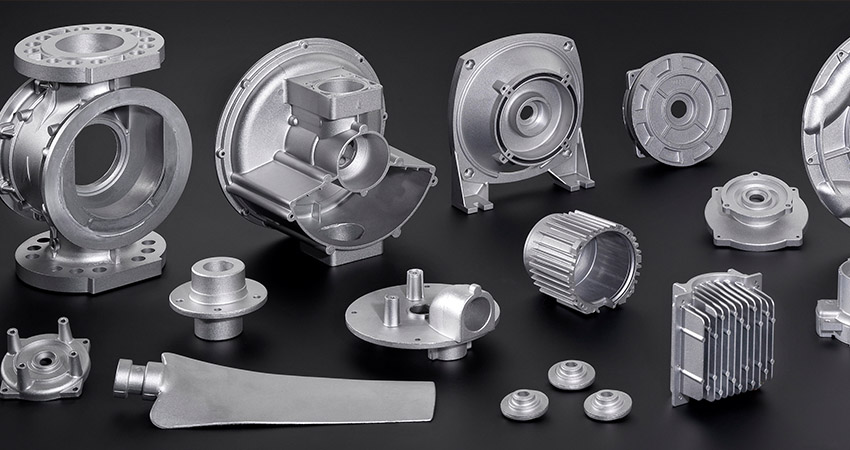
Style flexibility and complexity are significantly improved through using aluminum casting, permitting manufacturers to develop complex shapes and kinds that were formerly unattainable with typical techniques. This ability enables the manufacturing of elements with comprehensive geometries, such as complex inner flows and thin-walled frameworks, which can especially enhance the performance of the last product.
Aluminum casting strategies, such as die casting and sand casting, promote fast prototyping, enabling developers to iterate and refine their concepts swiftly. The capacity to produce personalized molds additionally contributes to far better alignment with details layout requirements, lowering material waste and reducing the need for extensive machining.
Furthermore, the light-weight nature of aluminum complements its design flexibility, as it enables both aesthetic allure and useful performance. Generally, the developments in aluminum casting offer makers with the tools to push the boundaries of layout, promoting technology across different sectors.
Superior Thermal and Electrical Conductivity
Aluminum's superior thermal and electric conductivity makes it a crucial product in various production applications. Compared to various other metals, aluminum offers substantial advantages, specifically in warm dissipation and electrical performance. Aluminum Castings. This home enables its extensive use in sectors ranging from auto to electronics, boosting overall efficiency and reliability
Thermal Conductivity Advantages
A vital benefit of aluminum casting exists in its exceptional thermal and electric conductivity, making it a suitable choice for numerous applications in contemporary manufacturing. The high thermal conductivity of aluminum allows for effective warmth dissipation, which is crucial in industries such as vehicle and electronic devices. Components crafted from aluminum can successfully take care of temperature changes, extending the life expectancy of items and boosting performance. This characteristic additionally makes it possible for manufacturers to produce light-weight layouts without compromising thermal effectiveness. In addition, aluminum's capacity to endure thermal cycling even more strengthens its placement in requiring environments. As markets significantly prioritize energy efficiency and performance, the thermal conductivity benefits of aluminum casting come to be significantly substantial in driving innovation and sustainability.
Electrical Conductivity Applications
The electric conductivity of aluminum enhances its thermal residential properties, making it a beneficial product in numerous applications within modern production. This conductivity makes it possible for reliable power transfer, which is important in electrical components such as wiring, connectors, and circuit boards. Aluminum's light-weight nature further boosts its allure in applications where lowering weight is essential, such as in aerospace and auto sectors. In addition, aluminum casting enables the development of intricate forms, enhancing the performance of electrical tools. The material's resistance to deterioration and oxidation additionally adds to durability in electrical environments, making sure dependability. In general, aluminum's superior electrical conductivity settings it as a preferred selection in markets that demand high performance and efficiency in their electric applications.
Comparison With Various Other Steels
While aluminum is renowned for its remarkable thermal and electrical conductivity, it is important to compare its properties with those of various other metals to comprehend its benefits completely. Copper, for example, displays even higher electric conductivity, making it preferable in details applications like electrical wiring. Copper's weight and expense can restrict its use. On the other hand, aluminum supplies a positive equilibrium of conductivity, weight, and cost, making it perfect for numerous production applications. Additionally, aluminum's thermal conductivity is normally above that of stainless-steel and titanium, which are typically made use of in high-temperature atmospheres. Inevitably, aluminum stands apart not just for its conductivity however also for its lightweight and corrosion-resistant properties, making it a flexible option in modern production.
Cost-Effectiveness and Reduced Material Waste
Maximizing cost-effectiveness and reducing product waste are important advantages of aluminum casting in modern-day production. Aluminum's light-weight nature adds to lower shipping expenses and power consumption during manufacturing. In addition, its excellent recyclability suggests that scrap material produced during the casting procedure can be recycled, substantially decreasing the general product prices.
Aluminum casting strategies often allow for complex forms to be generated with have a peek at these guys less secondary operations, which simplifies the production procedure and lowers labor expenditures. The capacity to create precise components reduces the demand for too much machining, further minimizing waste.
Firms taking on aluminum casting take advantage of minimized manufacturing time and boosted effectiveness, resulting in overall cost savings. This mix of reduced material costs, reliable reusing methods, and efficient manufacturing processes positions aluminum casting as a monetarily useful selection in the competitive landscape of modern production.
Advancements in Aluminum Casting Techniques
Recent improvements in aluminum casting methods are transforming the manufacturing landscape. Developments such as the integration of additive production, enhanced mold and mildew styles, and green casting processes are driving efficiency and sustainability. These growths not only boost item quality yet likewise lower environmental impact in the aluminum casting sector.
Additive Manufacturing Assimilation
Additive manufacturing is changing aluminum casting methods by allowing the manufacturing of complex geometries and light-weight structures that were formerly unattainable. This integration enables manufacturers to take advantage of 3D printing technologies to produce elaborate molds and cores, which assist in the casting of in-depth designs with boosted precision. Furthermore, additive production lowers material waste and reduces preparations, making it a more lasting and effective method. Because of this, firms can react much more rapidly to market demands and tailor items to meet certain client needs. This harmony between additive manufacturing and aluminum casting not just boosts design adaptability however additionally positions producers to innovate constantly, driving improvements in efficiency and product performance within the competitive landscape of modern-day manufacturing.

Improved Mold And Mildew Layout
As manufacturers seek to improve effectiveness and product high quality, technologies in mold and mildew layout have actually become a crucial element in contemporary aluminum casting methods. Advanced mold and mildew materials, such as silicon carbide and graphite, improve thermal conductivity and longevity, permitting faster air conditioning and boosted surface coatings. In addition, the assimilation of computer-aided layout (CAD) modern technology makes it possible for accurate mold geometries, assisting in complicated shapes that were previously testing to accomplish. Advancements like 3D-printed molds also provide rapid prototyping abilities, decreasing lead times substantially. Furthermore, modular mold and mildew layouts permit much easier modifications and repairs, decreasing downtime during manufacturing. Jointly, these enhancements not just enhance making procedures but additionally add to the overall top quality of aluminum cast items, meeting the evolving needs of various markets.
Eco-Friendly Casting Processes
While the aluminum casting sector remains to advance, a growing focus on sustainability has brought about the advancement of environment-friendly casting processes. These cutting-edge strategies aim to reduce environmental influence by reducing waste and energy see this website consumption. One significant approach includes making use of recycled aluminum, which significantly lowers the carbon footprint linked with resources removal. In addition, advancements in mold and mildew materials and styles permit for much more efficient warmth transfer, decreasing power needs during production. Water-based finishes and binders replace conventional solvents, in addition decreasing damaging discharges. Moreover, some producers are taking on closed-loop systems, ensuring that waste materials are reused within the manufacturing cycle. Jointly, these eco-friendly casting processes not only boost sustainability yet also add to a much more responsible production landscape.
Sustainability in Aluminum Casting Processes
Sustainability in aluminum casting procedures has actually come to be a focal factor for manufacturers intending to decrease their ecological influence. The sector is significantly taking on practices that minimize waste and enhance resource efficiency. One considerable approach entails making use of recycled aluminum, which calls for just a fraction of the power required to generate brand-new metal from ore. This not only conserves resources but also lowers greenhouse gas emissions connected with manufacturing.
Additionally, innovations in modern technology have actually resulted in more energy-efficient casting techniques, such as low-pressure and gravity casting, which optimize product usage and reduce energy intake. Makers are likewise executing closed-loop systems that enable the recycling of scrap product produced during the casting process. Additionally, using environmentally friendly coatings and lubricating substances further adds to an extra lasting operation. Generally, these efforts show a commitment to ecological stewardship while preserving the quality and performance of aluminum casting
Applications of Aluminum Casting Across Industries
Aluminum casting locates substantial applications across numerous industries as a result of its lightweight, strength, and flexibility. In the automotive market, aluminum castings are used to create engine blocks, transmission real estates, and wheels, improving gas efficiency while decreasing discharges. The aerospace sector utilizes aluminum castings for architectural components, benefiting from their high strength-to-weight proportion, which is essential for flight safety and efficiency.
In the consumer electronic devices sector, aluminum castings are made use of for real estate and architectural components, supplying sturdiness and visual appeal. Additionally, the construction market leverages aluminum spreadings for architectural elements and components, profiting from their resistance to rust.
The marine industry incorporates aluminum castings in boat frameworks and engine components, mirroring its viability for rough environments. Overall, the diverse applications of aluminum casting highlight its relevance in contemporary production, adding to technology and performance throughout numerous areas.
Frequently Asked Concerns
What Are the Usual Alloys Used in Aluminum Casting?
The usual alloys made use of in aluminum casting consist of 413, 356, and A380. These alloys are valued for their exceptional fluidness, toughness, and deterioration resistance, making them appropriate for different applications in production and engineering.
How Does Aluminum Casting Compare to Various Other Casting Methods?
Aluminum casting deals one-of-a-kind benefits over various other casting methods, such as lighter weight, outstanding rust resistance, and exceptional thermal conductivity. It also allows for detailed styles and faster production times compared to conventional materials like iron or steel.
What Is the Regular Life-span of Aluminum Cast Products?
The typical life expectancy of aluminum cast products differs, normally varying from 20 to half a century, depending upon factors such as ecological conditions, upkeep, and certain applications. Appropriate treatment can significantly extend their sturdiness and efficiency.
Exist Any Type Of Health Dangers Connected With Aluminum Casting?
The inquiry of health risks connected with aluminum casting occurs due to prospective direct exposure to aluminum dust and fumes. Long term inhalation might cause respiratory problems, emphasizing the relevance of suitable precaution during the casting process.
Just How Can Problems Be Decreased in Aluminum Casting?
To reduce issues in aluminum casting, producers can carry More Help out stringent quality assurance measures, enhance mold and mildew layouts, preserve correct temperature control, use ideal alloy compositions, and apply reliable cleaning methods to assure a defect-free casting procedure.